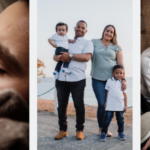
Book: Sarah, Plain and Tall

Sarah, Plain and Tall was written by Patricia MacLachlan, published in 1985 and awarded the Newberry Medal.  The thin paperback was part of my book collection for more than 25 years before I finally plucked it from the masses and started turning the pages last weekend.  I suppose it was fate- I hadn’t read it until I could understand a different aspect of it.  And now I can share it with you.

I wonder how many stepmothers have read this book.  Of those, I wonder how many were shocked to find that they weren’t as well-received as Sarah, a mail-order bride from Maine who was eagerly welcomed by her new family in the midwest.  I think that was what struck me the most:  the children in the book had endured the death of their mother and they wanted a new one. They were passionately curious about Sarah and delighted when she decided to visit.  Immediately, they loved her and wanted her to stay.  In modern-day real life, it doesn’t happen that way for most stepmoms.

But I didn’t start writing so I could slam the book for being unrealistic… it is what it is, and that’s what it’s supposed to be.  Furthermore, it’s based on a true story from the author’s family history.  And that’s awesome.  And Sarah is awesome…and I thought I’d point out why:

She didn’t assert herself as The Mother.  Sarah indulged the kids’ curiosity about her and she responded with genuine interest in them.  She didn’t push the relationships, she let them naturally unfold.

She had a cat.  In general, Sarah loved animals.  Animals build bridges between individuals who might otherwise have a hard time getting along.  Their presence relieves stress as they give us a focal point away from our problems.  They teach us how to love and they give us a commitment to share.

She stayed true to herself.  Sarah didn’t stop being Sarah in order to be a midwestern wife and mother.  She wore men’s overalls and helped repair the roof.  She insisted that she be taught to drive the wagon so she could travel to town by herself.  She didn’t kill the chickens that were given to her “for food”.  She brought a little bit of New England to her new homestead and her family respected and appreciated her for it.

Of course, I’m oversimplifying… but it was a really short book and I’m not Wednesday Martin.  The point is:  Stepmoms, keep your heads up and keep rockin’ it, Sarah-style :)

Do People Change?

Many years ago, I dated someone whom I’ll call “Don”.  He drove a sporty coupe and worked at a grocery store.  Back then, I wore short shorts and had a somewhat catty relationship with his ex-girlfriend.  Don and I ate at cheap restaurants, spent many evenings at the movies and engaged in a lot of “experimental” activity.  We were young and in love and… you get the idea.

Nowadays Don is married with a bunch of kids.  He’s a medical professional and owns a vehicle with four doors.  I’m sure it’s been a really long time since he vomited tequila and macaroni and cheese on someone’s bedroom floor.   Blue eyes aside, he barely resembles the guy who affectionately referred to me as “Boo Boo”.

Did he change?

It would be so easy for me to say “yes”.  I think most would agree, it’s often difficult to recognize our ex as the same person who was our partner.  It’s easy to point to things s/he has or does and assert, “[My ex] didn’t do that/want that!  This is a different person!”

And in some respects, that’s true.  I used to be a lovesick teenager, and I’m not anymore.  There was a time when I wanted to have children, and I don’t anymore.  Once upon a time I uttered the vows of matrimony, and now I’m divorced.  That’s a lot of flip-flopping— yet, I still feel like the same person.  And I think my closest friends and family would agree:  I’m still me.

There’s a difference between doing and being.

What we do changes quite a bit as we adjust to new hobbies and the different roles we play in life.  The Student behaves much differently than The Parent.   The Karate Expert dresses in contrast to The Rock Climber.  Yet, the Student, Parent, Karate Expert and Rock Climber can all be the same person— even on the same day.

And that leads me to being.  It’s easy enough to change what we do but it’s much more difficult to alter who we are.  Thoughtful Introverts don’t suddenly morph into Impulsive Extroverts (at least, not on a permanent basis).  Although they might be caring parents, Warriors don’t become Nurturers at heart.  Such inherent qualities remain with us, regardless of the circumstances of our lives.

There’s also a difference between what we look at and what we see.

To further complicate matters, let’s not forget the filters that our circumstances provide.  How is a warrior perceived by another warrior vs. a nurturer?  Sensitive individuals might cling to brutal offensive tactics when they feel threatened.  If she cheats with you, she’s a goddess… if she cheats on you, she’s a whore.

It’s kinda confusing… but at the same time, it’s not.

Present-Day-Don doesn’t act like the guy I used to frolic with on his college campus.  However, under the surface, Don is still that humorous and highly intelligent individual who loved (loves?) Scattergories as much as I do.

All of this makes me think… it makes me think about the qualities (not the activities) that truly make humans compatible.  It makes me think about the lenses through which we view our partners and our exes.  It makes me wonder what it is we’re looking for when we’re disappointed by what we see in another.

Do you have any thoughts to share?  Reflections on personal experience?  Opinions about whether or not people change?  Please, comment…

Guest Post: Being Blood-Related Doesn’t Preclude a Family Bond

Today’s post is brought to you by Jenny Ellis, who contacted me a few weeks ago with a request to write something for Relative Evolutions.  After some discussion regarding content, Jenny agreed to write a piece discussing the bonds that can exist between family members who aren’t related by blood.  As Stepmother’s Day approaches, I thought the timing was perfect.  Here’s Jenny…

They say that blood is thicker than water, indicating that blood relations trump any and all non-blood related relations. And it’s easy to see why a lot of people may think that, may even tout it as an unwavering fact. On the surface, being bound to one another by blood represents the deepest type of relationship you can have with someone. You share their DNA. However a blood bond isn’t always the have-all, end-all when it comes to relationships. In actuality it depends solely on the person.

Adopted children can be just as close to their parents

Just because someone is adopted doesn’t automatically make them less likely to be close to their adoptive parents as a natural-born sibling. Adopted children can form such a thick bond with their adoptive parents that it trumps a bond with their blood-related parents. For instance, I have a friend who was adopted by her step-father after he married her mother. Their marriage didn’t last, however the bond he formed with his adopted daughter did, and to this day she is still closer to him than she is to her birth mother. Blood doesn’t define everything.

Blood-related siblings can break off all ties

In the aforementioned marriage between my friend’s mother and step-father they also had a son together. That son is her step-father’s flesh and blood, and yet he has cut off all ties with his family. He doesn’t speak to dad, he rarely speaks to his mom, and he has no contact with my friend (his half-sister). While his half-sister chose a relationship with her adoptive father, he chose a relationship with no one, proving that a blood relationship doesn’t always mean an actual relationship.

Non-blood related siblings can be close

After her step-father remarried he had two kids with his new wife. They have zero blood relation to my friend, however all three of them are constantly in contact and have no trouble calling each other “brother” and “sister”. The lack of a blood relationship doesn’t impact their feelings toward one another as siblings at all. None of the siblings have any relationship with their aforementioned half-brother. Blood isn’t the only type of bond.

While blood may run thick with some families, it doesn’t run thick with all of them. You can have a close knit family with no blood relations at all, and those families can be closer than others that are untainted with divorce, adopted children, step-children or half-children. As colloquial of a phrase that “blood is thicker than water” is, it’s just that – a phrase. Blood doesn’t define everything.

Jenny Ellis is a freelance writer, and a regular contributor for aupair jobs. She welcomes your comments at: ellisjenny728@gmail.com.

Lost Communication

Last summer, Ex-BF and I took the boys on a hike.  As the journey concluded, we emerged from the woods and the trail continued through a field.  It was there that we stopped to wait for Josh, as it was normal for him to lag behind.  I had a camera in my hands and I was poised to capture his emergence from the forest… Unfortunately, he didn’t show up.  After several minutes of waiting, I hurriedly walked the trail back into the woods.  I didn’t see him.  I called his name.  He didn’t answer.  I walked faster.  I searched harder.  I called louder.  Nothing.

That feeling was present in my chest.  I teetered between mute paralysis and frantic insanity as I desperately tried to think.  I pulled out my phone and called Ex-BF to let him know I couldn’t find Josh.  Then I kept going.  

“JOSH!” I yelled.  “JOOOOSSSSSHHHHHHH!!!!!!!!!”

Finally, I heard him.  “TARA?!” His voice was shaking with fear.

I bolted forward.  As I rounded a curve in the trail, he came into view.  We ran toward each other and fiercely embraced, basking in the relief of one of those Oh-Thank-God moments.

“Where were you?” I asked him.  “What happened?”

Josh explained that he was lost in thought (typical for him… it is both a blessing and a curse) and when he looked around he didn’t recognize his surroundings.  He thought maybe he’d taken a wrong turn so he started to walk the other way.

This kind of thing often happens in life, minus the literal forest.  Sometimes people don’t meet us where we expect them to.  They don’t act according to our expectations.  Sometimes it’s because they’re lost.  Sometimes it’s because their mind is in a different place.  Sometimes they’ve purposely chosen to walk in a different direction or on a different path.

This is especially difficult when it happens with people we’re close to.  There’s usually an emotional response similar to what I experienced on the hiking trail:  panic, confusion, fear, anger, helplessness.  There’s often a physical reaction driven by those emotions:  screaming, weakness, heightened senses or perhaps superhuman strength.  The loss of control is devastating.  At this point, productive communication can be impossible.

When Josh was lost in the woods, there was so much I wanted to say to him:

“Where are you?”

“Come back.”

“You’re in big trouble, mister!”

“I love you.”

Unfortunately Josh couldn’t hear me because he was in a different place.  That’s also true, in the not-so-literal sense, during the scenarios I mentioned above.  A few weeks ago, I spent an hour on the phone with someone who couldn’t hear me.  I paced, I prodded, I asked, I insisted, I used new words to communicate the same ideas… I even raised my volume to an embarrassing level.  Nothing worked.  I realized that I needed to stop trying to control the situation.  I had to unclench my fist and shut my mouth (why is that so hard to do?).   “We’re not in the same forest,” I told myself.

It’s hard to know whether or not the other person is truly lost and wants to be found.  Sometimes they don’t.  Sometimes they need to find their own way.  Sometimes it’s appropriate to rush in.  Sometimes it’s better to wait it out.  And sometimes it’s best to let go and walk your own path.

If anyone knows the secret of when to take which action, please comment ;)

Social Media and The Relationship

“[Insert Female Name]: Great friend; greater lover.”

The text above was featured in the AIM Away Message of a friend of mine several years ago. Upon reading it, I remember wondering why he would want to broadcast his sexual escapades (with a mere “friend”, no less) to such a wide audience. Isn’t that the kind of thing guys are supposed to tell their friends over beer in a barroom? Apparently, not anymore. Since that message, I viewed many updates over the years that followed. My friend is now married to the woman referenced above. They have children. And a dog. I’ve seen photos of their family vacations. And it’s kinda funny, because I’ve only actually seen my friend in person about five times in the past decade.

That brings me to the current topic that’s on my mind: sharing the details of one’s life via social media. Methinks this is going to be at least a 3-part series.

While I was married, Facebook wasn’t open to anyone but college students, and Greg and I had “graduated” from the use of Instant Messenger. There was no login code for people to find out what we were doing on the weekends. We enjoyed a very traditional existence, one in which secrets were shared via hushed voices and photos were printed on glossy paper and then either framed or stashed away in a box. We had a close-knit group of friends that we actually hung out with and if something needed to be said, we used our voices instead of our fingers (whoa, I suddenly feel so old). I had no idea that I was experiencing the end of that era.

Ex-BF and I were already together for a couple years before we both signed up for Facebook. At first I got caught up in the constant sharing of status updates, photos, videos, comments, etc. In the beginning, I posted several photo albums featuring myself, ex-BF and the boys. And then I realized, those aren’t my kids and I don’t actually “know” most of my “friends” all that well. At that point, I went on a friend-deleting spree (this was before I had grasped the power of alllllllllll those privacy controls) and I stopped posting pictures of the kids.

As time wore on, I became increasingly sensitive about what I fed my Facebook page. At one point, I read an Eckhart Tolle book and became disgusted with the validate-my-ego nature of the FB Beast. I halted all status updates for a decent period of time and when I did return to posting, most of what I shared was cause-related.

As a couple, ex-BF and I did not publicize our relationship. Neither of us listed a relationship status in our profile. We didn’t post lovey message on each other’s walls. We usually didn’t interact with each other’s threads. We didn’t have to, because we lived together and we talked face-to-face. We even talked in person about what was going on on Facebook. I felt good about the fact that we didn’t publish all of our family or our life activity online. Sure, we were present on the network, but we weren’t all in-your-face about all the details of our lives, especially our relationship. Our Network didn’t know when we had sex, how often we disagreed or what we had for dinner. I liked that. It felt… mature.

Then the relationship ended. My family was obliterated. And now my eyes see things very differently. While it’s true we didn’t flaunt our lives on Facebook, we were still present on Facebook… and we are still present on Facebook. When my marriage broke up, the framed photos were packed in boxes and now they live in my attic. Not this time around. I can’t pack up those images- they’re all out there in a Timeline. Several Timelines, actually. Even if I deleted those memories from my account, there are many others that remain accessible by merely a few clicks and some scrolling. And I’m not sure how I feel about that. I’d rather pack a bunch of keepsakes in boxes and stow them away.

On one hand, I get the fact that the whole point of a timeline is to depict that which is past. But…does it have to be so public? Does everyone have to see that? Do I have to see that every time I log on? There was a time when it was just my life- and it was normal. Right now it’s evidence of a life I no longer have and that sorta hurts (interestingly enough, the stuff here on the blog doesn’t bother me so much because it was used to illustrate issues larger than myself). Later, the time will come when it’s no longer painful but simply irrelevant. Perhaps then I’ll wonder why my new partner has to share the same spotlight as the old one. I wouldn’t display my wedding pictures again, especially not if they were going to share wall space with images of my new family. In a way, it seems disrespectful to the past as well as the present. (…Not to mention the fact that I’m feeling somewhat possessive of that which is gone. I don’t want to look at it right now, yet I do harbor a desire to keep those memories as mine. I want to reserve the right to visit them on a rainy day…just me. Not my hundreds of friends and friends of friends.)

Is anyone else considering this to the degree that I am? If you’re separated/divorced, how public was your “intact family” (i don’t like that phrase)? Did you set intentional boundaries regarding the publication of images and family details? And how do you feel about that now? Do you prefer to have those outdated images out there? Or would you rather they be hidden from the public view?

Love Lesson From The Dog

Bullygirl’s medical crisis forced me to think about a lot of things.  From the upheaval of emotion and outflow of cash came an influx of inner peace and clarity.  I needed this.  I never would have asked for it, but I needed it.  I’d like to extend my humble thanks to The Universe.

It’s been eight days since I brought Bullygirl home and we are still adjusting to our revised lifestyle.  Read:  she hates me a little bit.  It’s no wonder, really- the doctor’s orders are that she must spend 99.9% of her time in her crate for the next several weeks.  She’s not allowed to romp, jump, play tug-of-war (her favorite game!) or use the stairs…ever again.

“It’s tough love,” the vet told me.  ”But it’s for the best.  You don’t want her to have a re-rupture.”

I most definitely do not want to invite any further problems for Bullygirl.  In fact, I already kind of blame myself for her predicament:  I never insisted that she walk nicely on her leash and for years, her neck has been stressed from all that pulling/jerking.  All of this has me thinking…

Love Means Discipline.

Obviously, this is something we all know on some level.  But sometimes we forget.  Sometimes we’re too selfish to perform the selfless act of loving another.  Sometimes, it’s easier to follow our momentary emotions, “go with the flow”, or ignore the present situation, than it is to consider the bigger picture and take a more responsible course of action.  At times, we’re all guilty of this.  While the topic is plaguing me, I thought I’d share some of my thoughts…

  • Love/Discipline means teaching a puppy to obey commands for his/her safety and your own sanity.
  • Love/Discipline means encouraging children of divorce to continue positive relationships with both parents.
  • Love/Discipline means maintaining one’s integrity in the relationship.
  • Love/Discipline means building a ramp instead of risking a re-rupture.
  • Love/Discipline means communicating, even when the subject matter is uncomfortable.
  • Love/Discipline means administering the yucky-tasting medication.
  • Love/Discipline means moving at the speed of the slowest person, so all stakeholders can appropriately adjust to changes in the family structure.
  • Love/Discipline means enforcing house rules even though you don’t see your children very often.
  • Love/Discipline means exhibiting respect for others, regardless of your relationship status.
  • Love/Discipline means taking little ones to the doctor (or the vet) for shots, despite their protests.
  • Love/Discipline means prioritizing.

“She’s so cute!” is never a good reason to do (or not do) anything.  I lacked the self-discipline to train Bullygirl for her own good.  I failed her and there was a price to pay for that.  I feel terrible.  Moving forward, I know better.  And I’m grateful for the opportunity to continue loving my four-legged companion.

Love means discipline.  I’ll add this to the list of other life/love lessons I’ve learned from my dogs… perhaps I’ll write about more of them another time.

Single Mom, Standing

Bullygirl had a medical crisis this week.  Monday morning she had terrible muscle spasms which caused her to scream in agony.  Her regular vet gave her injections of painkillers and Valium, neither of which provided relief.  As Bullygirl writhed in pain, Dr. G and I agreed that it was necessary for her to see a specialist, ASAP.

The closest and most recommended neurologist with an MRI machine was two hours away.  Following a highly stressful car ride, we arrived and were happy to discover large dog beds and water bowls in the waiting room.  The staff audibly marveled at the cuteness of my little girl.  I breathed a short sigh of relief, knowing I had come to the right place.

Following a physical examination, it was recommended that further testing be performed to find out what was causing the pain.  Because there were other dogs waiting for the MRI machine, it would be a couple hours before Bullygirl’s turn.  The techs took her in the back to let her rest and they turned me loose on the town.  I sent some text messages, made a phone call to Ex-Boyfriend to update him on the situation and then went to find lunch.

I slid into a booth at a well-known chain restaurant and paused for the first time that day.  My baby was in crisis, I was easily facing a five-figure financial obligation and I was alone.   My hands were shaking and my breath was shallow.  And yet… I noticed with curiosity that a cool current of calm was flowing beneath my fragile surface.  I sat still and continued to observe (my Buddhist therapist will be so proud of me!)

The ego-self that lives in my mind was actively engaged in a role as The Wounded Victim.  It babbled continuously:  “Ex-BF should be here … We were his family! …How dare he cast us aside and replace us so easily? ….He said he loved us! …He hasn’t even offered to help… Friends and co-workers are more concerned than he is, and she was his dog! …. This is an emergency!  And he hardly cares at all…”

I was listening to that loop and staring at my coffee cup when it hit me.   The senseless chatter in my mind stopped abruptly as I was confronted with the firm declaration,

“He isn’t here because you don’t need him.”

I took a deep breath and sunk into that calmness under the surface.  There I observed no pity party, only the recognition of what was true at the moment:  Bullygirl is in good hands.  If I don’t have the money, I can get the money.  I’m her mommy and she needs me.  I’ve got this.

I relaxed a little, ate a good lunch and returned to the vet’s office.  Bullygirl’s MRI showed a severely herniated disk in her neck and the staff was dedicated enough to operate immediately (which meant they worked way past their scheduled quitting time).  I camped out in the waiting room until 8pm when they wheeled her out of the OR and I could see her.   As I drove home, exhausted, the radio gushed countless love songs in honor of Valentine’s Eve.  Each one of them reminded me of the devotion and loyalty between me and my dog.  As I pondered the difference between “love” and “affection,” I felt better than I had all day.

Bullygirl is home now.  She has a long road to recovery and we’ll need to make some permanent (and difficult) changes to our routines.  It’s going to be tough on both of us, yet I’m feeling quite capable at the moment.  …Oh, and it turns out I’m not alone.  Bullygirl and I were aided by a fabulously qualified and compassionate medical staff.  My friends and family have been hugely supportive- even offering to accompany me to the specialist’s facility.   My co-workers took up a collection to put towards the bill.  I am humbled and grateful beyond measure.

This event, terrible as it was, forced me to see what was important and to realize my own strength.  I think I’m done being a wounded woman.  Right now my little girl needs her mommy, and I’m standing at attention.

Family Ties To My Other Mother

My dad’s girlfriend is wonderful.  She’s been part of my life for more than five years and I can’t say enough about how much I appreciate her and how grateful I am that my father found someone so caring.

When my current personal crisis unfolded, I took Bully Girl and went to stay with my dad and Mary (not her real name, of course).  When I walked in the door, Mary was making dinner in the kitchen.  She asked how I was, and I burst into tears.  In that motherly way, she wrapped her arms around me, stroked my hair and held me while I sobbed on her shoulder (I should note here that hugging makes me a little uncomfortable.  Clearly, I was a mess!) .  Since then we’ve spent countless hours talking, listening, crying (that would be me doing the crying) and sharing stories of breakups past.  When I left their house and returned to my old abode (I guess it’s a good thing I didn’t sell it), she sent a Hallmark card and two containers of soup.

Last week, Mary’s father passed away and earlier this week I attended his memorial service.   As I pulled into the parking lot on Tuesday morning, an employee of the funeral home stopped me.

“Are you family?” he asked.

His question threw me for a loop and I hesitated.  “Um, kinda?” I replied.  “What counts as family?”

The attendant narrowed his eyes at me, shook his head a little and tried another approach.  “Are you going to the cemetery?”

That made it much easier!  I told him that I was not and he directed me to park at the far end of the lot.

I saw Mary right away when I entered the funeral home.  I gave her a hug and asked how she was doing.  She told me she was OK and immediately asked about my current state of mind.  I looked at her with a bit of confusion… she was the one who lost her father, and yet she was concerned about me?  She concluded that we were both going through similar emotions.  As we approached the casket together, tears filled her eyes and we embraced again.

“Thank you for coming,” she said.  “It means so much to me.”

“Thank you for everything you’ve done for me,” I told her.

“Well,” she sniffled.  “You’re my daughter.”

“And you’re one of my moms,” I finished.

(I’m lucky to have so many moms.  At present count, I have four including the one who grew me in her womb.)

When the service concluded, I stood with my dad and Mary as I explained that I couldn’t go to the cemetery because I needed to get back to work.  At the same time, some people around us began talking about my dad.

“That’s her fiancé,” one woman told another.

“I thought he was her husband,” someone else said.

Mary turned around to address the confusion.  She and my dad aren’t officially married, but they don’t shy away from the terminology.

“This is my husband,” she said with a gesture towards my dad.  As she put her hand on my shoulder, she further explained, “And this is our daughter, Tara.”

My heart swelled.  Those of us with divorced parents are seldom addressed with the phrase “our child”.  It’s always “my…” or “his…” or “her…”  It was a first for me and it felt good.  Like… totally, genuinely real.

Leaving the funeral, I had a lot to smile about.  How much weight do biology and marriage really carry?  Once again, life has proven:  love makes a family.

(That was a nice line to end the post with, wasn’t it?  Of course, as most of us know, love isn’t enough.  You also need respect, time, emotional investments, dedication, compromise…and all that other stuff.  But, hopefully you know what I’m trying to say here. ;) )

What Does That Mean? Married?

A few weeks ago, I entered into a debate on Twitter about the usage of the term “stepmom”.  I questioned the assertion that “girlfriends” shouldn’t call themselves “stepmoms” unless they have the proper paperwork, ie: marriage certificate.

Now, before I go any further, I should note that I always feel somewhat fraudulent when using the S-word to describe myself, given the fact that I’m not married.  However, I still have to ask the question:  what difference does it make?  What does a marriage certificate prove?  That someone paid for a piece of paper?  What does “marriage” mean anyway?

Last weekend, I took the opportunity to discuss the topic with Josh (age 9) after he mentioned several people he knew were getting married.  The conversation unfolded like this:

Me: What does that mean?

Josh:  It means you live together.

Me:  Does that mean Daddy and I are married?

Josh:  No, you need a certificate.

Me: How do you know we don’t have a certificate?

Josh:  You need rings too.

Me:  Daddy and I have rings.

Josh:  But you have to engage first.

Me:  What does that mean?

Josh:  It means someone asks to get married.

Me:  Oh, so you can’t get married if you don’t get engaged?

Josh:  I guess.  And you have to have a big party too.

Me:  A party? I thought all you needed was a certificate?

Josh:  Well, that’s what Mommy and Stepdad did…. I don’t know.  What does it mean?

Me:  I was just wondering what it meant to you.

Josh:  What does it mean to you?

Me:  I don’t know.  I’m still trying to figure it out.

At some point during that discussion, Josh told me that married people can file their taxes together (Why does he know that?).  He neglected to mention anything about the quality of the relationship or those famous vows that we all know so well.  … Or did he?  Actually, he did state that the worst part of his mother’s wedding was when they stood up front and the minister talked.  I thought that was an interesting tidbit.

Personally, I don’t believe that a piece of paper can prove anything about a relationship: not the husband/wife relationship and certainly not the parent/stepparent/child relationship.  When it comes to my own stepparents, I have an emotional desire to refer to my dad’s girlfriend as my “stepmom” and an alternate urge to refrain from using the S-word when describing my mom’s husband.  Again, it’s about relationships; not paperwork.

What are your thoughts?  Does marriage matter?  Why?  Does certification govern the titles in your family?  Does anyone use more creative titles to describe blended family members?

Lies Kids Tell

Several months ago, Boyfriend and I dropped the kids off with their mother on a typical Sunday night and went about our business of running errands.  While we were in the local home improvement store, his phone rang.  It was his ex.  She was furious because Drake told her that we left him alone at the ski resort we’d been to and he was assaulted by a gang of teenagers.  She wanted to know why we would abandon the children in such a large place and why he didn’t tell her about the horrendous incident.

Boyfriend was flabbergasted.  We hadn’t left the kids alone.  They were never out of our sight for more than a few seconds.  As he explained to her, we start together and we end together.  Every slope, every time.

She persisted.  But he insisted:  Drake was lying.

Instead of volleying the accusations, Boyfriend switched gears and asked her a question:  ”What happened before he told you this story?”

His ex explained that the boys bounded into the house like animals.  They were loud and proud and wanted to brag about their increased snowboarding skills.  When she told them they needed to calm down, the tears started started flowing and the story spewed forth.

This was an easy one for me to decode because I remembered the game from my own childhood.  I vividly recall feigning injury to avoid punishment.  What mother can resist the tears of her child?

For Drake, his story came with a bonus.  He was able to deflect Mom’s disappointment away from himself while presenting her with a new target for her irritation: a villain she loved to hate.  Drake was no longer causing a disruption in the house.  Instead, he was the innocent victim of poor parenting.  Drake is a smart kid.  He’s successfully used this tactic several times.

Kids with divorced parents have also been known to say things simply to boost a parent’s ego.  Little lies such as “I don’t like him/her” or “I don’t like it there” can accomplish that pretty easily.  Divorced parents take great pride in being better and preferred, and their kids know it.

Yet another motive (and you might disagree) is to arouse conflict between Mom and Dad.  As backwards as it sounds, parental conflict can be a comfort to children.  For one thing, it means that Mom and Dad are passionately engaged.  And for kids who long for their parents to be “together”, arguments might be preferable to cold distance (if you care enough to fight about it, it means you care, period.).  Fighting can also be reminiscent of the marriage and therefore it’s familiar and somewhat soothing.

The psychology behind this stuff is rather fascinating.  Parents and stepparents, realize this can be a natural part of the process for kids.  Recognize the internals struggles that drive their deceit.  Help to guide them and calm their anxieties.  Communicate love and acceptance even when you’re angry…

…and don’t be so quick to fall for all that BS ;)